The Heart of the Home: Celebrating the Mothers Who Foster
- Latest News
- May 8, 2026

The Heart of the Home: Celebrating the Mothers Who Foster
They are advocates, nurses, tutors, chauffeurs, chefs, and champions. They show up every single day – for children who need them most. This Mother’s Day, we celebrate the extraordinary people who mother through foster care.
There is a particular kind of love that doesn’t begin at birth. It begins with a phone call, a suitcase on a doorstep, a child who doesn’t yet know how to trust – and a person who decides, without hesitation, to try anyway. That is the love of a foster parent. And this Mother’s Day, we want to celebrate it fully.
Mothering is not defined by biology. It is defined by presence, consistency, and the daily, devoted act of showing up for a child – especially when that child has been shaped by experiences no child should ever have. Research confirms what foster families already know in their bones: the presence of a stable, nurturing caregiver is one of the most powerful forces in a child’s development.1 That caregiver – that mother – changes the trajectory of a life.
In my practice at Let It Be Us, an Illinois-licensed child welfare agency, I see foster parents, and more often mothers, in action every day. I am able to offer information on resources, I check in on the kids that we have placed, and I am always checking to see how they are doing, as women. How they are holding up. Nine times out of ten they never talk about themselves, they talk about the kids. One talked about how she strategically placed night lights upstairs. One talked about how a 12 year old boy came into their home and fell in love with their dog and the dog never left his side. One talked about taking a 14 year old girl to get her hair professionally braided and how hard it was for the girl to select a color because she thought she’d never get the opportunity to have the experience again. I especially loved hearing from the foster parent – mother – who was parenting a teen who was pregnant, and how she was helping her settle, and eat right, and catch up on her homework. All of these scenarios dig deep into my soul, and inspire me to work harder within my agency, because I know we are making a difference, through these incredible mothers.
The Scope of the Work
Across the United States, more than 328,000 children are in foster care at any given time.2 In Illinois alone, nearly 17,000 children are in the care of the state. Each of them needs what every child needs: someone to come home to. Someone who knows their favorite meal, their teacher’s name, what keeps them up at night, and what makes them laugh.
| 328K+
Children in U.S. foster care who need a consistent, loving caregiver |
55%
Of foster care adoptions completed by the foster parent themselves³ |
25%
Of all foster care adoptions completed by single women⁴ |
The demographics of foster care tell their own story. Approximately 25% of all foster care adoptions are completed by single women4 – and studies of foster caregivers consistently find that the large majority identify as female, with one UK study finding 86% of foster carers were women.5 This is not because caring for children is exclusively a woman’s role – it isn’t, and more fathers, couples, and single men are stepping into this work every day. But it is a recognition that women have led this work for generations, and that their contribution deserves to be named, honored, and celebrated.
What a Foster Mother Actually Does
Ask a foster parent to describe their week, and you will hear something that sounds less like caregiving and more like an act of devotion. They are awake before the children and long after them. They sit in school meetings and pediatrician offices and courtrooms. They drive children to visits with siblings, with grandparents, with birth parents they love – because maintaining those connections matters, even when it is logistically and emotionally complicated. They do this because they understand that a child is not just in their care. A child arrives with a whole family, a whole history, a whole heart.
| “The mother/child attachment relationship is a cornerstone of human development, with profound implications for the well-being of both the mother and child… Secure attachment provides a foundation for healthy development and resilience.” |
Research published in 2024 confirms that maternal sensitivity – the consistent, attuned responsiveness to a child’s needs – shapes language, executive function, academic achievement, and self-reliance not just in early childhood but across all 15 years studied.6 Foster parents who bring this kind of presence to a child who has never experienced it before are doing something clinically significant. They are literally rewiring possibility.
After the children are in bed, the work continues. Foster parents research the right therapist for a child with a trauma history. They review IEP documentation. They respond to caseworker emails. They fill out forms, coordinate visits, and prepare for court hearings. They do laundry at midnight and prep nutritious lunches before dawn – not because anyone is watching, but because they have decided this child deserves the same care as any child.
The Science Behind What They’re Doing
Children who enter foster care have often experienced significant adversity — abuse, neglect, exposure to substance use, the trauma of separation.7 These experiences affect brain development, attachment patterns, and the body’s stress response system.8 The research is unambiguous about what helps: a consistent, safe, attuned caregiver.9
A landmark 2025 systematic review found that attachment-based interventions — essentially, helping caregivers become more sensitive and responsive to the children in their care — meaningfully improve attachment security, reduce behavioral problems, and support psychosocial development in foster children.10 What this means in plain language is that the foster parent who sits with a dysregulated child at the kitchen table instead of sending them to their room, who remains calm when the child is not, who shows up again tomorrow without conditions — that person is the intervention. That person is doing the science.
And when a foster parent decides to adopt? The research shows that children whose foster parents chose adoption demonstrated significantly higher levels of attachment security than those who did not.11 Permanency changes everything — and for many foster parents, the journey that began with a temporary placement becomes a lifetime of love.
The Invisible Things Nobody Sees
Foster parents carry a particular emotional weight that rarely gets discussed. A 2025 systematic review identified what researchers called the experience of “balancing compassion, sacrifice, and heartbreak” — caring for children who have experienced trauma while managing the complex feelings that come with uncertainty, attachment, and potential loss.12 This is not a reason to turn away from foster care. It is a reason to talk about it honestly, and to ensure that foster parents receive the support they deserve.
What the research confirms — and what any experienced foster parent will tell you — is that the hardest moments are often also the most meaningful ones. The child who finally hugged back. The teenager who called to say thank you, years later. The sibling group who stayed together because one family said yes. These are the moments that don’t make it into the paperwork, but that last a lifetime.
When Fostering Becomes Forever
More than half of all children adopted from foster care are adopted by their foster parents.3 The relationship that began as a placement becomes, in the most profound sense, a family. The mother who answered the first phone call is still there – not because she was required to be, but because she chose to be. Over and over again. For as long as it takes. For always.
In FY 2024, nearly 47,000 children were adopted from foster care in the United States.13 Behind each of those adoptions is a family – often led or anchored by a woman – who expanded the definition of what their life would look like, and in doing so, expanded the whole world for a child.
| Adoption generally provides greater permanence and more favorable outcomes for children — particularly when it is built on the foundation of a trusting, established relationship with a caregiver who already knows and loves them.¹⁴ |
This Mother’s Day, Take the Step
If you have ever thought about fostering – if it has lived quietly in the back of your mind, or come up in a conversation, or surfaced when you read a story about a child waiting for a family – this is an invitation to act on it.
You don’t have to have all the answers. You don’t have to be perfect. You just have to be willing to show up, consistently and with love, for a child who needs exactly that. The skills you already have – your patience, your empathy, your ability to advocate, your instinct to nurture – are the most important qualifications for this work.
Let It Be Us is here to help you take the next step. We will help you understand the different types of foster care, identify the right agency for your family, and find the path that fits your life and your capacity to give.
| Expand Your Mothering Skills This Mother’s Day
Foster care looks different for every family. Let It Be Us can help you identify which type of foster care is the right fit – and connect you with the right agency to get started. |
| TRADITIONAL FOSTER CARE
Providing a stable home while reunification is the primary goal |
SPECIALIZED FOSTER CARE
Supporting children with more complex medical or behavioral needs |
| EMERGENCY FOSTER CARE
Opening your home on short notice for children in crisis |
THERAPEUTIC FOSTER CARE
Intensive, trained support for children with significant trauma histories |
Start the Conversation and join Let It Be Us: HERE
To every person who has ever answered the call – who has packed a bag for a child they just met, driven them to a visit with a family they love, helped them with homework they’re behind on, and tucked them in at night with gentleness and hope – thank you. You are doing some of the most important work in the world. Happy Mother’s Day.
References & Citations
- La Rosa, V.L., & Commodari, E. (2024). Mother–Child Attachment Relationship in Pregnancy, Postpartum, and Early Childhood. European Journal of Investigation in Health, Psychology and Education, 14(8). PMC11353280.
- CAFO. (2025). US Foster Care Statistics 2025: Data & Trends. cafo.org/foster-care-statistics
- Sevita Health. (2023). 50 Foster Care Statistics. Citing Children’s Coalition for Adoptive Improvement data. blog.sevitahealth.com
- The Bair Foundation. (2021). Single Parent Foster Families. Citing Foster Coalition data. bair.org
- Ottaway, H., et al. (2020). Supporting the emotional needs of young people in care: a qualitative study of foster carer perspectives. BMJ Open. PMC7066644
- Foley, J.E., Olino, T.M., & Weinraub, M. (2024). On the Broader Significance of Maternal Sensitivity. Developmental Science. PMC11647561
- Annie E. Casey Foundation. (2025). Child Welfare and Foster Care Statistics. aecf.org
- ResearchGate. (2019). Implications of Foster Care on Attachment: A Literature Review. Citing developmental traumatology research.
- David, R., Dembrey, N., & Majumder, P. (2024). Outcomes from attachment-based group interventions for foster carers and adoptive parents. Adoption & Fostering, 48(4).
- Attachment-Based Interventions and Outcomes in Foster and Adoptive Families: A Systematic Review. (2025). Psychology Research and Behavior Management. PMC12710316
- Attachment Styles in Children Living in Alternative Care: A Systematic Review. Citing Ponciano (2010). PMC4923104
- Caring for Traumatized Children: Secondary Trauma and Compassion Fatigue Among Adoptive and Foster Parents. (2025). Journal of Family Social Work.
- National Council For Adoption / AFCARS. (2025). Foster Care and Adoption Statistics. adoptioncouncil.org
- Developmental outcomes across foster care, adoption, and child welfare services: a mini review. (2025). PMC12894384
About Let It Be Us:
Let It Be Us is a nonprofit organization dedicated to recruitment, matching and placement within foster care and adoption across the State of Illinois. Through innovative programming and strategic partnerships, Let It Be Us aims to improve outcomes for children in the child welfare system. Learn more at www.letitbeus.org.
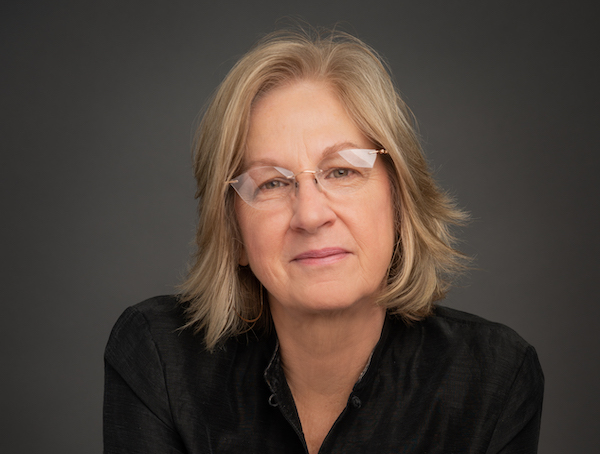
Dr. Susan A. McConnell is the Founder and Executive Director of Let It Be Us, an Illinois licensed child welfare agency with the mission of providing collaborative, innovative solutions of effective recruitment and placement within Illinois foster care and adoption. Susan has an MBA from DePaul University and a Doctorate Degree in Social Work from the University of Southern California, where her work focused on permanency within child welfare. She is the Chair of the Permanency Committee of the Illinois Statewide Foster Care Advisory Council, appointed by the Director of the Illinois Department of Children and Family Services (DCFS) in 2017. She is also an adoptive parent with over 30 years of open adoption experience. She can be reached at susanmcconnell@letitbeus.org.
Let It Be Us is an Illinois 501(c)3 and licensed child welfare agency. The mission of Let It Be Us is to provide collaborative, innovative solutions of effective recruitment and placement within Illinois foster care and adoption. The Let It Be Us platform manages the Adoption Listing Service of Illinois and the Heart Gallery of Illinois, engines of success for Illinois foster care adoptions. The Let It Be Us vision is for all children in the Illinois child welfare system to achieve educational equity, employment equity, and overall well being through the incorporation of Let It Be Us Programming into statewide advancements in foster care and adoption recruitment and placement. For more information about Let It Be Us, visit www.letitbeus.org.