I See It Every Time: The Quiet Greatness of People Who Open Their Homes to Children
- Latest News
- May 22, 2026

I See It Every Time:
The Quiet Greatness of People Who Open Their Homes to Children
They advocate, nurture, and fight for children who need it most – navigating court dates, school meetings, sibling visits, and midnight research sessions with equal parts grit and grace. This is what I’ve learned about them.
| Join a Free Let It Be Us Webinar
Ready to learn more? Register using the form at the top of our website and join one of our free virtual webinars to ask questions, meet our team, and find your path into foster care. |
There is something I have noticed, after years of working in child welfare, that I don’t think gets said often enough: the people who become foster parents are not extraordinary because of what they have. They are extraordinary because of what they give – quietly, consistently, and without applause.
I have had the privilege of working alongside hundreds of foster families, and I want to tell you what I see in them. Not the paperwork version. Not the licensing checklist. The real version – the one that happens at 11 o’clock at night when the house is finally quiet and they are still awake, still thinking, still loving a child who may not yet know how to receive it.
I see people who are, at their core, builders of safety. And I want you to know: if you have ever wondered whether you could be one of them, you probably already are.
The First Thing They Do
Before a child ever walks through the door, foster parents prepare their home the way a gardener prepares soil – with care, with intention, with an understanding that what grows next will depend on what’s already been put in place. They think about every detail, because the details are everything to a child who has not always felt safe.
I’m thinking of one family in particular who spent an entire afternoon placing night lights. Not just one in the hallway – but one in the bathroom, one near the stairs, one at the end of the bedroom so there was never a moment of complete darkness for the child who was coming. They had never met this child. They just knew that darkness can feel enormous when you’re small and uncertain, and they wanted to make sure that if that child woke at 2 in the morning, the world would feel a little less frightening.
That is not a small thing. That is the whole thing, really – compressed into a night light.
| Foster parents prepare their home the way a gardener prepares soil – with care, with intention, knowing that what grows next depends entirely on what they put in place first. |
The Dog at the Door
I have to tell you about the dogs. So many of the foster families I know have a dog – and I am convinced that dogs understand what is happening in ways that humans sometimes can’t articulate. I have watched children who couldn’t make eye contact with an adult walk right up to a dog and bury their face in its fur. I have learned about a golden retriever plant itself outside a child’s bedroom door every single night, as if it had received specific instructions to stand guard.
Animals are, in many ways, the first safe bridge. They ask nothing. They carry no history of the child’s past. They simply show up, tail wagging, and offer themselves completely. Foster parents who have animals in their home often tell me that the pet did half the therapeutic work in the first week – and I believe them. I raised my own children, through birth and through adoption, with dogs as well as cats, and they are quiet miracle workers.
The Kitchen Is the Heart
I have been told more times than I can count that the kitchen is where healing begins. Not the therapist’s office – the kitchen. A foster parent who learns that a child loves macaroni and cheese and makes it for them the first night is sending a message that words cannot: I paid attention. You matter. I made this for you.
The best foster parents I know think about food the way a translator thinks about language – it is a way of communicating care across whatever distance exists. They cut the sandwiches the right way. They remember that one child hates onions and another won’t eat anything green. They make breakfast before school without being asked, because they know that a child who leaves the house on a full stomach carries something with them all day – something that feels, however distantly, like being held.
| Join a Free Let It Be Us Webinar
We host free virtual webinars where you can learn exactly what fostering looks like — the real day-to-day, the types of care, the support available to you, and how to get started. No pressure, no obligation. Register at the top of LetItBeUs.org — our webinar calendar is always open. |
Getting Them to School – and Back Again
Foster parents become logisticians of love. They know the school schedule, the bus route, the name of the teacher, the name of the substitute teacher, and which day is library day. They show up to parent-teacher conferences for a child whose last name is different from theirs without a moment of hesitation – because as far as they are concerned, that child is theirs to advocate for.
I have watched foster parents navigate IEP meetings with the focus of an attorney and the warmth of a grandmother. I have watched them sit in the carpool line every afternoon – not because they had to, but because a consistent face at pickup is, for a child who has experienced instability, a form of medicine. Predictability is healing. Routine is an act of love.
And the homework – I want you to know about the homework. Foster parents sit at kitchen tables long past dinner, working through fractions and spelling words and book reports, often for children who have fallen behind because their education has been interrupted. They don’t make the child feel behind. They just sit beside them and work through it, patient as a river finding its way.
The World as a Classroom
The foster parents I admire most understand something profound: that their job is not just to keep a child safe – it is to open the world to them. So they take them to museums on Saturday mornings and stand beside them in front of exhibits and say, “What do you think that is?” They let curiosity lead. They don’t rush. They buy the membership because they know they will be back.
They take them to the library – and this is the one I love most. They walk in like it is a sacred place, because it is. They help the child choose their own card. They let the child hold it. They explain what it means: that with this small piece of plastic, you can borrow anything. Any story. Any world. Any life. A library card, in the hands of a child, or a teen, who has not always had access or permanence, is a kind of miracle. It says: this is yours, and no one can take it.
| A library card, in the hands of a child, or teen, who has not always had access or permanence, is a kind of miracle. It says: this is yours, and no one can take it. |
The Journal on the Nightstand
Many of the foster parents I know give children journals. Not as an assignment – as a gift. They say something like, “This is just for you. You don’t have to show it to anyone. You can write whatever you want, draw pictures, leave it blank – it’s yours.” And then they leave it there on the nightstand, next to the night light, and they don’t ask about it again.
What they are really doing is teaching the child that their inner life has value. That what they think and feel and wonder about deserves a home, even if it is just a spiral notebook with a flower on the cover. They are planting the idea that the child is someone worth listening to – even if the only listener, for now, is the page.
Keeping the Connections That Matter
This is the part that I think surprises people most when they learn about foster care: the very best foster parents are fierce champions of a child’s connections to their birth family. They drive children to visits with siblings. They help arrange time with grandparents. They understand – at a molecular level – that a child can love more than one family, and that honoring those relationships is not a threat to their own bond with the child. It is, in fact, one of the most healing things they can do.
I have learned of foster parents sit in McDonald’s for two hours while a child had lunch with a grandmother they hadn’t seen in months – not because they were required to, but because they knew what that visit meant. That kind of generosity is not common in the world. It is, I think, a particular hallmark of people who foster: they love big enough to share.
The Caseworker, the CASA, and the Team
Foster parents are not solo acts – they are conductors of a complex orchestra. They communicate regularly with DCFS caseworkers, keeping them informed and asking the right questions. They build relationships with CASA volunteers who are advocating for the child in court. They attend meetings, return calls, fill out logs, and participate in every part of the system – not because the system is always easy, but because the child at the center of it deserves someone who will show up for every note of the symphony.
The foster parents who do this well treat every professional on the team as a partner. They don’t see the caseworker as an inspector or the CASA as an outsider. They see them as fellow travelers on the same road, all headed in the same direction: toward the best possible outcome for one specific child.
| Not Sure Which Type of Foster Care Is Right for You?
At Let It Be Us, we recruit for four types of foster care – emergency, therapeutic, specialized & traditional.. Our free webinars walk you through each one so you can find the right fit for your family, your capacity, and your calling. Register at LetItBeUs.org — use the form at the top of our website. |
| Traditional Foster Care
Providing a stable, loving home while reunification with birth family is the primary goal |
Specialized Foster Care
Supporting children with more complex medical, developmental, or behavioral needs |
| Emergency Foster Care
Opening your home on short notice for children removed in crisis situations |
Therapeutic Foster Care
Intensive, trained support for children with significant trauma histories |
What Lives in Their Soul
I want to end with something that is harder to quantify but impossible to miss. The people who foster – whether they adopt or not, whether a child stays for three weeks or three years – share something in their soul that I can only describe as a specific kind of kindness. Not a soft kindness. A sturdy one. The kind that doesn’t flinch at hard things. The kind that can hold a grieving child at midnight and still make breakfast in the morning. The kind that absorbs frustration and confusion and sometimes outright rejection – and shows up the next day, unchanged in its warmth.
This kindness is not naïve. Foster parents are often the most clear-eyed people in the room. They know the system is imperfect. They know outcomes are uncertain. They know they may love a child deeply and then have to say goodbye. And they do it anyway, because they have decided – somewhere in the quiet of themselves – that the loving matters more than the certainty.
I believe that is one of the most courageous decisions a human being can make.
| They have decided – somewhere in the quiet of themselves – that the loving matters more than the certainty. I believe that is one of the most courageous decisions a human being can make. |
If you see yourself anywhere in these pages – if something in you recognized the night lights, the library card, the carpool line, the journal on the nightstand – I want you to know: that recognition is not an accident. It is an invitation.
Come work with Let It Be Us to work with us . We will help you figure out the rest.
| Your Next Step Starts Here
Let It Be Us will help you find the right type of foster care, connect you with the right agency, and walk through every step alongside you. 1. Register on our website — use the form at the top of LetItBeUs.org to tell us about yourself 2. Attend a free webinar — join us virtually, ask questions, and meet our team 3. We’ll help you find your fit — traditional, specialized, emergency, or therapeutic — and connect you with the right agency Register at LetItBeUs.org · Webinars at LetItBeUs.org/events |
With gratitude for every family that opens their door –
Susan McConnell
Executive Director & Founder, Let It Be Us · letitbeus.org
About Let It Be Us:
Let It Be Us is a nonprofit organization dedicated to recruitment, matching and placement within foster care and adoption across the State of Illinois. Through innovative programming and strategic partnerships, Let It Be Us aims to improve outcomes for children in the child welfare system. Learn more at www.letitbeus.org.
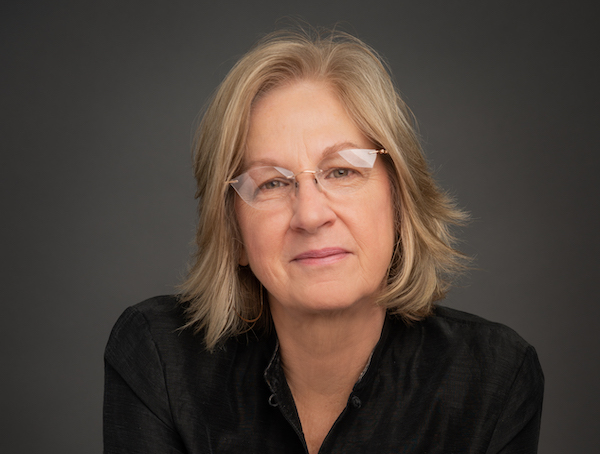
Dr. Susan A. McConnell is the Founder and Executive Director of Let It Be Us, an Illinois licensed child welfare agency with the mission of providing collaborative, innovative solutions of effective recruitment and placement within Illinois foster care and adoption. Susan has an MBA from DePaul University and a Doctorate Degree in Social Work from the University of Southern California, where her work focused on permanency within child welfare. She is the Chair of the Permanency Committee of the Illinois Statewide Foster Care Advisory Council, appointed by the Director of the Illinois Department of Children and Family Services (DCFS) in 2017. She is also an adoptive parent with over 30 years of open adoption experience. She can be reached at susanmcconnell@letitbeus.org.
Let It Be Us is an Illinois 501(c)3 and licensed child welfare agency. The mission of Let It Be Us is to provide collaborative, innovative solutions of effective recruitment and placement within Illinois foster care and adoption. The Let It Be Us platform manages the Adoption Listing Service of Illinois and the Heart Gallery of Illinois, engines of success for Illinois foster care adoptions. The Let It Be Us vision is for all children in the Illinois child welfare system to achieve educational equity, employment equity, and overall well being through the incorporation of Let It Be Us Programming into statewide advancements in foster care and adoption recruitment and placement. For more information about Let It Be Us, visit www.letitbeus.org.