
Illinois Is Moving Forward: A Look Inside the 2nd Annual Let It Be Us Adoption Symposium
- Latest News
- May 27, 2026

Illinois Is Moving Forward: A Look Inside the 2nd Annual Let It Be Us Adoption Symposium
What happens when the state’s top child welfare leaders, a nationally recognized adoption attorney, a veteran child welfare advocate, and a room full of professionals who care deeply about waiting children all gather in one place? You get a conversation that matters – and momentum that lasts.
On a morning in Chicago in May 2026, something important happened in Illinois child welfare. The 2nd Annual Let It Be Us Adoption Symposium brought together the state’s leading voices on adoption, permanency, and foster care – and what they said together matters for every child still waiting for a family.
The 2nd Annual Let It Be Us Adoption Symposium took place in Chicago, Illinois, at the Center on Halsted, drawing professionals from across the Illinois child welfare community for a day of honest conversation, shared learning, and collective commitment to one of the most pressing challenges facing the state: finding permanent, loving families for the more than 16,000 children currently in Illinois foster care.1
Hosted by Let It Be Us, an Illinois-licensed child welfare agency and statewide manager of the Illinois Adoption Listing Service and the Heart Gallery of Illinois,2 the symposium brought together Illinois DCFS, Chapin Hall at the University of Chicago, Illinois CASA, and child welfare agencies from across the state – all united around the belief that permanency through adoption is not a last resort. It is, for many children, the most powerful form of safety and stability that exists.
Illinois has made measurable, historic progress on permanency in recent years. 3 The 2025 permanency rates are higher than they have ever been in the past.4 More than 6,248 children achieved permanency in FY25 alone.5 These are not just data points. They are children who now have families. And they are the reason the Adoption Symposium exists – to keep that momentum going, to ask harder questions, and to make sure the professionals doing this work every day have the community and the knowledge to keep pushing forward.
| 16,610
Children in Illinois foster care¹ |
6,248+
Children achieved permanency in FY25⁵ |
38.4%
2025 permanency rate — 6-year high⁴ |
Why This Symposium Matters
Illinois has a complicated relationship with its own child welfare history. For years, the state ranked last in the nation for timely permanency6 — a designation that represented not just a policy failure but a human one, measured in children who spent years in the system waiting for the permanent families they deserved. The work of changing that has been slow, deliberate, and increasingly visible.
Under Director Heidi Mueller’s leadership, DCFS has reached its highest staffing level in more than 15 years.7 New legislation including the Kinship in Demand (KIND) Act, signed by Governor Pritzker on February 5, 2025,8 has opened new permanency pathways through kin-first placements. And a new law requiring individualized transition plans beginning at age 15 for youth in care9 – championed by State Sen. Lakesia Collins, who herself aged out of Illinois foster care – signals a legislature increasingly committed to the children the system serves.
The Adoption Symposium is Let It Be Us’s annual commitment to keeping that momentum going – to gathering the professionals, advocates, attorneys, and leaders doing this work and giving them a room in which to be honest about what is working, what still needs to change, and what every waiting child deserves.
| Permanency is not a program. It is a promise – one that every professional in this room has made, implicitly, to every child whose file has ever crossed their desk. |
The 2026 Panel: Voices That Shape the Future
The strength of any symposium lies in its speakers — and the 2026 panel represented one of the most distinguished gatherings of Illinois child welfare expertise assembled in recent memory. Four leaders took the stage, each bringing a distinct and essential perspective on adoption as a form of permanency in Illinois.
| 2026 PANEL – FEATURED SPEAKERS
Heidi Mueller – Director, Illinois Department of Children and Family Services (DCFS) Jocelyn Fetting – Illinois Child Welfare Advocate Genie Gillespie – Illinois Adoption Attorney Lindsay Perlmutter – Director of the Adoption Listing Service, Let It Be Us Susan McConnell – Executive Director, Let It Be Us |
Heidi Mueller, Director of Illinois DCFS, brought the state’s highest-level perspective on where Illinois stands and where it is going. Her presence at the symposium signaled something important: that state child welfare leadership is not operating in a silo. It is engaged, listening, and committed to the collaborative relationships that produce better outcomes for children. Director Mueller has spoken publicly about the record-high permanency achievements of recent years7 and about the continued investment needed to sustain that progress. Her remarks at the symposium reflected that same combination of clear-eyed accountability and genuine optimism about what Illinois can achieve.
Jocelyn Fetting, as a child welfare advocate, brought the perspective of someone who sits alongside families and children navigating the system – not from a policy seat, but from the lived reality of the cases that don’t make it into the annual reports. Advocacy in child welfare requires a particular kind of persistence, and her presence grounded the conversation in the human stakes of every decision that gets made in a courtroom or a caseworker’s office. The children whose permanency is delayed, the families whose cases stall, the teenagers who age out without a permanent family – these realities were present in the room because she brought them.
Genie Gillespie, Illinois adoption attorney, added the legal dimension that is too often missing from child welfare conversations. Adoption is, at its foundation, a legal process – and the attorneys who navigate it understand the barriers, the timelines, the procedural complexities, and the moments when the system creates obstacles that have nothing to do with the best interest of the child. Her expertise helps the field understand not only what permanency requires legally, but how legal practice can be aligned more intentionally with permanency goals. In a state that has moved from last in the nation toward genuine improvement, the legal architecture of adoption matters enormously.
Lindsay Perlmutter, Director of the Adoption Listing Service at Let It Be Us, brought both clinical and legal expertise to the conversation – a combination that reflects the complexity of adoption work itself. As the operational leader of the Illinois Adoption Listing Service and the Heart Gallery of Illinois, Perlmutter works daily at the intersection of family matching, caseworker collaboration, and the search for the right home for the right child. Her work represents the applied practice of everything the symposium discussed – and her presence on the panel connected the policy conversation to the practical reality of what happens when an agency picks up the phone and says, “I have a child who needs a family.”
Susan McConnell, Executive Director of Let It Be Us, brought both personal and professional expertise to the event and served as moderator. The lead behind all program development at Let It Be Us, her background spans more than three decades of lived and learned experience in child welfare. Susan holds a Doctorate in Social Work, giving her the research foundation to anchor every conversation in evidence – and the practitioner’s instinct to translate that evidence into the kind of plain, honest language that moves people to act. She is also an adoptive parent with more than 30 years of open adoption experience. Susan’s guiding belief, woven through everything Let It Be Us does, is that permanency is the single most protective thing you can give to a child or teenager in foster care. Not a service, not a program, not a placement – but a permanent family. That belief shaped the symposium from its first moment to its last.
The Room: Who Was There and Why It Mattered
The symposium drew professionals from some of Illinois’ most important child welfare institutions. The attendance of these organizations – in a single room, for a single purpose – reflects something that the data alone cannot capture: the growing sense of shared mission in Illinois child welfare.
| ✓ Illinois Department of Children and Family Services (DCFS) | ✓ Chapin Hall at the University of Chicago |
| ✓ Illinois CASA | ✓ Illinois-Licensed Child Welfare Agencies (statewide) |
| ✓ Adoption Attorneys | ✓ Child Welfare Advocates |
| ✓ Foster and Adoptive Parent Advocates | ✓ Let It Be Us Team and Partners |
The presence of Chapin Hall10 is particularly meaningful. As one of the nation’s leading research centers for child welfare policy, Chapin Hall’s engagement with Let It Be Us’s symposium reflects a recognition that the translation of research into practice is not automatic – it requires the kind of direct, relationship-based collaboration that a gathering like this makes possible. Research tells us what works. The symposium is where the people who implement “what works” come together to learn it, share it, and commit to it.
Illinois CASA11 brings a perspective that is both legal and deeply human. CASA volunteers are appointed by the courts to represent the best interests of individual children – and they often know those children better than anyone else in the system. Their presence in the room is a reminder that every statistic about permanency, every percentage point of improvement in the state’s rate, represents a specific child with a specific story, a CASA volunteer who knows their name, and a family somewhere waiting to be found.
| The more agencies know each other, trust each other, and understand each other’s resources, the more children get placed. The symposium is where that knowing and trusting begins. |
What the Field Is Talking About: Key Themes from 2026
The conversations at this year’s symposium reflected both the progress Illinois has made and the work that remains. Several themes emerged consistently across the panel discussion and Q&A that are worth carrying forward into the field.
Adoption as an equal path, not a last resort. One of the most important conversations in Illinois child welfare right now is the reframing of adoption — not as a failure of reunification but as an equally valid and sometimes more appropriate form of permanency. A 2025 systematic review of 61 studies across five developmental domains found that adoption consistently provides greater permanence and more favorable outcomes than foster care, particularly when it occurs earlier in a child’s life.12 The symposium advanced that reframing in a room full of professionals who have direct influence over how permanency decisions get made.
The teens who are still waiting. Teenagers in foster care remain among the hardest-to-place populations in Illinois, with permanency rates for youth ages 12 to 17 at just 26.2% in 2025.4 The symposium did not shy away from this reality. The professionals in the room work with these young people every day, and the conversation reflected both the urgency of their need and the specific, targeted recruitment strategies that are beginning to move the needle for older youth.
The KIND Act and the kin-first shift. Governor Pritzker’s signing of the Kinship in Demand (KIND) Act on February 5, 20258 was discussed as a landmark policy development. The Act directs DCFS to use a kin-first approach to placement decisions and extends equal payments to relative caregivers. Research from the University of Illinois School of Social Work confirms that kin-first placements reduce the risk of abuse, improve children’s social and educational outcomes, and increase the likelihood of permanency.13 Illinois’s kin-first shift, supported by the KIND Act, represents one of the most meaningful policy changes of the past decade.
The generational stakes of permanency. High school graduation rates for foster youth who age out without permanency hover between 50 and 55%, compared to 95% for the general population.14 Fewer than 3% of youth who age out of foster care earn a four-year college degree, compared to 49% of the general population.15 And research shows that moving a young person from dropping out of high school to graduating college benefits society between $700,000 and $800,000 over a lifetime.16 The permanency investment is not just a child welfare investment. It is a public health investment, an economic investment, and a generational one.
Collaboration as the infrastructure of permanency. Let It Be Us has provided appropriate adoptive family referrals for 54% of collaborative cases with fellow Illinois child welfare agencies. The symposium is, among other things, the event that builds and deepens the inter-agency trust that makes that collaboration possible. Every relationship built in this room is a resource for a child somewhere in Illinois whose case will benefit from it.
The Illinois Adoption Listing Service and Heart Gallery
Central to the work of Let It Be Us and to the conversations at this year’s symposium is the organization’s management of both the Illinois Adoption Listing Service and the Heart Gallery of Illinois.2 These two programs, awarded to Let It Be Us by DCFS in 2025,17 serve as the state’s primary public-facing tools for matching waiting children with prospective adoptive families.
The Illinois Adoption Listing Service gives prospective adoptive families the ability to explore profiles of children available for adoption in Illinois. It is the first point of contact for many families who are ready to say yes – and it is Let It Be Us’s responsibility to ensure that the profiles on that platform reflect the full humanity of every waiting child. The Heart Gallery of Illinois pairs professional photography and storytelling with that same purpose: to give waiting children, particularly teenagers and children with complex needs, the opportunity to be seen as the remarkable, full human beings they are.
For child welfare agencies whose children are featured on these platforms, collaboration with Let It Be Us is a direct pathway to expanded family resources. The symposium provided a venue to deepen those collaborative relationships and to ensure that every agency in the room understands what the Adoption Listing Service and Heart Gallery can do for the children on their caseloads.
Looking Forward: What Comes Next for Illinois Child Welfare
The 2nd Annual Adoption Symposium was not an ending. It was a checkpoint – a moment to take stock of how far Illinois has come and to recommit to the distance still to travel. With more than 16,000 children still in foster care1 and a permanency rate that, while the best in six years, still means that the majority of long-term foster children did not reach permanency in 2025,4 the work is far from done.
The 3rd Annual Adoption Symposium will build on the momentum of this year’s event. Let It Be Us is committed to expanding its reach, deepening its conversations, and ensuring that the professionals doing this work every day have a dedicated place to come together, to learn, and to remember why they started.
That is the conversation Let It Be Us exists to start. And the Adoption Symposium is where the people who carry that conversation forward come together to make sure they are never carrying it alone.
| Somewhere in Illinois, a family who doesn’t yet know they are ready is one conversation — one webinar, one open door — away from saying yes to a child who has been waiting for exactly them. |
| Get Involved with Let It Be Us
Whether you are a child welfare professional, a prospective foster or adoptive parent, or a community member who believes every child deserves a permanent family – Let It Be Us wants to hear from you. Attend a free webinar: www.letitbeus.org/events Contact Susan McConnell, Executive Director of Let It Be Us: susanmcconnell@letitbeus.org | 847-528-2044 Learn more: www.letitbeus.org |
References & Citations
- CAFO – US Foster Care Statistics 2026: Data & Trends (Updated March 2026). cafo.org/foster-care-statistics. Illinois has 16,610 children in foster care, third highest in the nation.
- Citizen Newspaper Group – DCFS Awards Massive Foster Care Adoption Contract to Let It Be Us (April 2, 2025). citizennewspapergroup.com. $750,000 contract to manage the Illinois Adoption Listing Service and Heart Gallery of Illinois.
- Illinois DCFS – Annual Progress and Services Report FY2026. dcfs.illinois.gov. Record-high permanency outcomes and placement stability progress.
- Child and Family Research Center (CFRC), University of Illinois – Data Center: Permanence in 12 Months for Children in Care 24 Months or More. cfrc.illinois.edu/data-center-tables.php. Data extracted September 30, 2025. Permanency rate reached 38.4% in 2025.
- Illinois DCFS – About Us / FY25 Permanency Data. dcfs.illinois.gov. More than 6,248 children achieved permanency in FY25.
- Illinois CASA – Illinois Child Welfare Statistics at a Glance. illinoiscasa.org. Illinois has historically ranked last in the nation for timely permanency.
- Northern Public Radio / WSIU – Illinois DCFS Director Cites Progress, Says More Changes Are Needed (December 6, 2024). northernpublicradio.org. Director Mueller cites highest permanency rate in 8 years and highest staffing in 15 years.
- Illinois DCFS / Governor JB Pritzker – Kinship in Demand (KIND) Act signed February 5, 2025. dcfs.illinois.gov/loving-homes/fostercare.html. Kin-first placements and equal payments for relative caregivers.
- City Bureau – A West Side Senator Wants to Boost Support for Young People Aging Out of Foster Care (September 22, 2025). citybureau.org. New law requires individualized transition plans beginning at age 15, effective July 2026.
- Chapin Hall at the University of Chicago – Child Welfare Research and Policy. chapinhall.org. Leading research center for child welfare policy and outcomes.
- Illinois CASA – About Illinois CASA. illinoiscasa.org. Court-appointed special advocates for children in the Illinois child welfare system.
- PMC / National Library of Medicine – Developmental Outcomes Across Foster Care, Adoption, and Child Welfare Services: A Mini Review (2025). pmc.ncbi.nlm.nih.gov/articles/PMC12894384. 61-study systematic review finding adoption provides greater permanence and more favorable outcomes across all domains.
- University of Illinois School of Social Work – Exploring Guardianship as a Solution for Foster Care Permanency. socialwork.illinois.edu. Research confirms kin-first placements improve outcomes and reduce risk of abuse.
- Annie E. Casey Foundation / University of Connecticut (Okpych) – Foster Care Education Outcomes: New Research Challenges the 3% Myth (2025). aecf.org. Foster youth complete high school at rates of 69-85%, compared to 95% of the general population.
- Route 21 / Sevita Health – Foster Care Statistics 2025. rte21.org. Fewer than 3% of youth who age out of foster care earn a four-year degree, compared to 49% of the general population.
- Route 21 – Foster Care Statistics 2025. rte21.org. Moving a youth from dropping out to graduating college benefits society between $700,000 and $800,000 over a lifetime.
- Citizen Newspaper Group – DCFS Awards Massive Foster Care Adoption Contract to Let It Be Us (April 2, 2025). citizennewspapergroup.com. $750,000 DCFS contract awarded to Let It Be Us.
- Illinois DCFS – Child and Family Services Plan 2025-2029. dcfs.illinois.gov. Approximately 60% of children reviewed had been in care long enough to qualify for a TPR petition, yet many still lacked timely permanency goals.
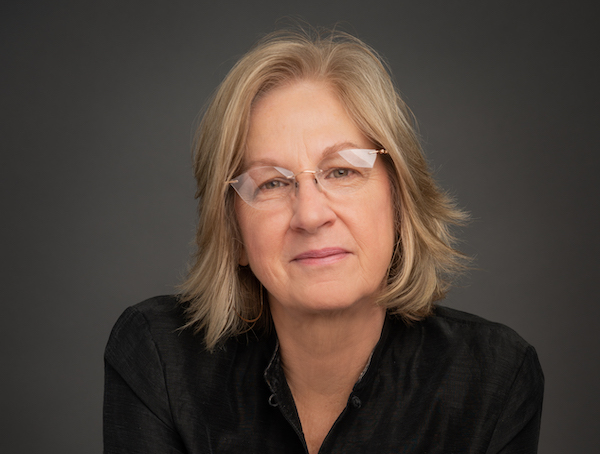
Dr. Susan A. McConnell is the Founder and Executive Director of Let It Be Us, an Illinois licensed child welfare agency with the mission of providing collaborative, innovative solutions of effective recruitment and placement within Illinois foster care and adoption. Susan has an MBA from DePaul University and a Doctorate Degree in Social Work from the University of Southern California, where her work focused on permanency within child welfare. She is the Chair of the Permanency Committee of the Illinois Statewide Foster Care Advisory Council, appointed by the Director of the Illinois Department of Children and Family Services (DCFS) in 2017. She is also an adoptive parent with over 30 years of open adoption experience. She can be reached at susanmcconnell@letitbeus.org.
About Let It Be Us
Let It Be Us is an Illinois-licensed 501(c)(3) child welfare agency dedicated to recruitment, matching, and placement within foster care and adoption across the State of Illinois. Let It Be Us manages the Illinois Adoption Listing Service and the Heart Gallery of Illinois. Through innovative programming, strategic partnerships, and proprietary matching technology, Let It Be Us works to improve permanency outcomes for children in the Illinois child welfare system. Learn more at www.letitbeus.org.
Let It Be Us is an Illinois 501(c)3 and licensed child welfare agency. The mission of Let It Be Us is to provide collaborative, innovative solutions of effective recruitment and placement within Illinois foster care and adoption. The Let It Be Us platform manages the Adoption Listing Service of Illinois and the Heart Gallery of Illinois, engines of success for Illinois foster care adoptions. The Let It Be Us vision is for all children in the Illinois child welfare system to achieve educational equity, employment equity, and overall well being through the incorporation of Let It Be Us Programming into statewide advancements in foster care and adoption recruitment and placement. For more information about Let It Be Us, visit www.letitbeus.org.


